Difference Between Nutraceutical and Pharmaceutical: A Complete Guide for Indian Brands
Anyone who enters India’s healthcare products market soon runs into two words — nutraceuticals and pharmaceuticals. They are often confused but they have different purposes, regulation, manufacturing standards and marketing rules. Knowing the difference between nutraceutical and pharmaceutical products helps you choose the right category, avoid compliance trouble and plan your investment properly.
What Are Nutraceuticals?
The word combines “nutrition” and “pharmaceutical”. Nutraceuticals are food derived or nutrient based products that provide health benefits beyond basic nutrition. Examples include vitamins, minerals, probiotics, omega-3 capsules protein powders herbal extracts antioxidants (glutathione).
They are used to support wellness, fill nutritional gaps and reduce risk of lifestyle-related issues. They are not meant to diagnose disease, treat or cure disease. Most can be bought without a prescription in tablet capsule powder softgel liquid form.
What Are Pharmaceuticals?
Pharmaceuticals are medicines designed to diagnose, treat, cure or prevent specific diseases. They contain APIs with a defined therapeutic effect (antibiotics, antihypertensives, insulin, painkillers, vaccines). Antibiotics, antihypertensives, insulin, painkillers and vaccines are typical examples.
Because they act on the body to change a disease process, pharmaceuticals have to prove safety and efficacy through testing. Many are only available on prescription.
Difference Between Nutraceutical and Pharmaceutical Products
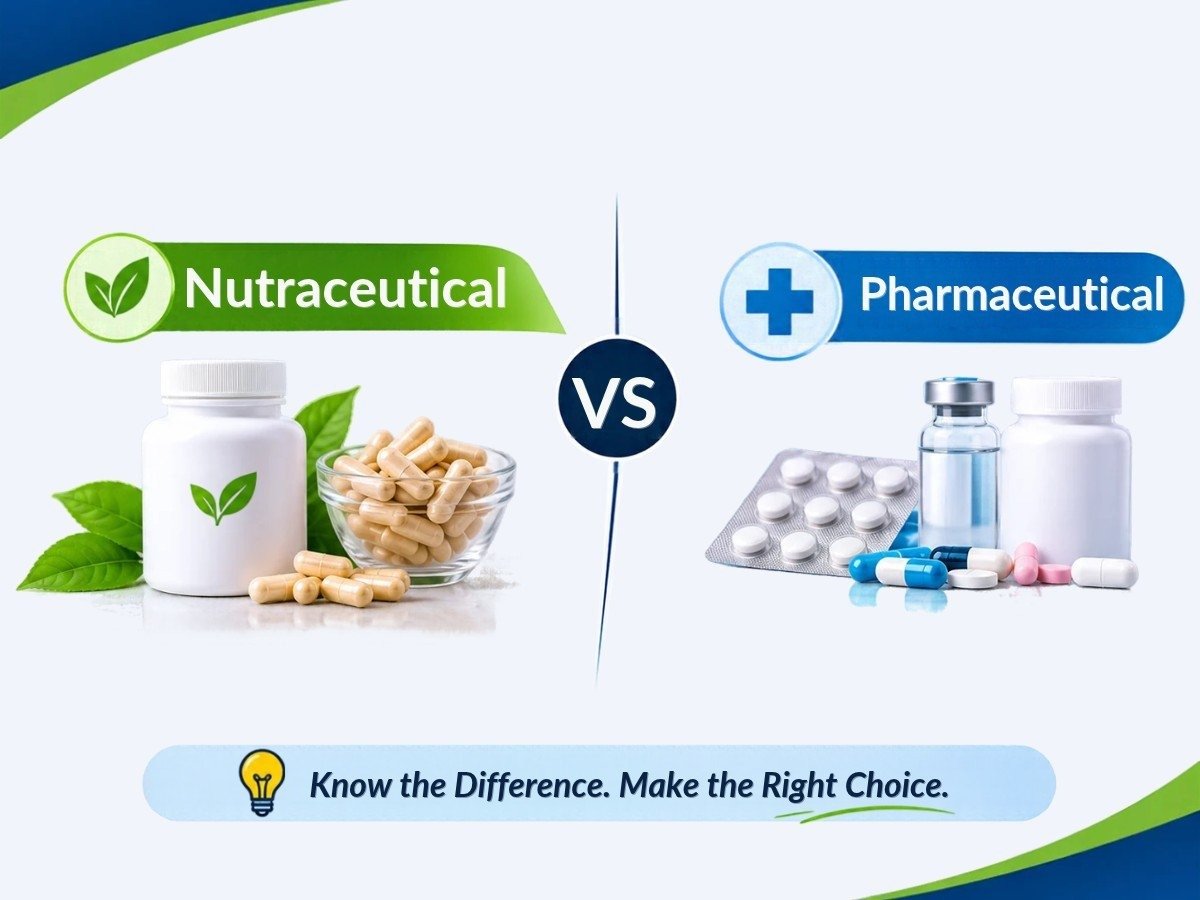
The easiest way to understand the difference between nutraceutical and pharmaceutical categories is to compare them on the factors that matter most.
Purpose
- Nutraceuticals support health, nutrition and prevention
- Pharmaceuticals target a diagnosed medical condition
Source of Ingredients
- Nutraceuticals use natural or nutrient based ingredients (vitamins, amino acids etc) Plant extracts
- Pharmaceutical APIs (synthetic, semi-synthetic or biological)
Regulation in India
Nutraceuticals are regulated by Food Safety and Standards Authority of India (FSSAI) under the Food Safety and Standards Act and its nutraceutical regulations.
Pharmaceuticals are regulated under Drugs and Cosmetics Act by Central Drugs Standard Control Organisation (CDSCO) and State Licensing Authorities.
Clinical Evidence
Pharmaceuticals generally require extensive preclinical and clinical trials before approval.
Nutraceuticals need safety and ingredient compliance but the burden of evidence for approval is lighter (hence what they can claim). This also limits what they can claim.
Claims Allowed
A pharmaceutical may say it treats a disease.
Nutraceuticals can only make permitted structure or function and nutrition claims (“supports immunity” or “source of antioxidants”). Disease treatment claims on a nutraceutical are not allowed.
Prescription Requirement
Most nutraceuticals are sold over the counter.
Pharmaceuticals go from OTC to Rx depending on their schedule (schedule being how often they are taken).
Side Effects and Risk
Pharmaceuticals carry side effects and interactions so need medical supervision.
Nutraceuticals are milder but if they’re over-dosed or mixed with medicines it can still be problematic.
Manufacturing and Quality Standards
Both need disciplined manufacturing but expectations are different in scale and strictness.
Pharmaceutical units have to follow Good Manufacturing Practices (GMP) under Schedule M with controls over validation, documentation, sterility (injectables), stability testing and pharmacovigilance.
Nutraceutical units are licensed by FSSAI along with GMP, HACCP and ISO standards. Quality testing is still required in both cases – potency, heavy metals limits, microbial limits and batch consistency.
Some manufacturers hold both licences. This means tablets can be produced alongside capsules, creams and even sterile products in one plant which is good for brands who want a mixed portfolio.
Market and Business Considerations
The difference between nutraceutical and pharmaceutical businesses also shows up in commercial terms.
Entry Cost and Speed
Nutraceutical brands can launch faster and with less investment because formulations are simpler and the approval process lighter; pharmaceutical launches take longer because licensing, documentation and clinical data (new drugs only) have to be collected.
Sales Channel
Nutraceuticals are sold at pharmacies, e-commerce, gyms, wellness stores and direct-to-consumer websites whereas pharmaceuticals rely heavily on doctors, hospitals and chemist networks.
Brand Building
Nutraceuticals are based on consumer awareness, reviews and lifestyle trends; pharmaceuticals build trust through medical representatives, prescriber relationships and clinical credibility.
Growth Outlook
Health awareness is rising, ageing population and preventive care habits are driving demand for nutraceuticals but pharmaceuticals will continue to be needed for treatment driven needs.
Which Category Should You Choose?
It depends on what you want to achieve, your budget and your expertise. If you want to get a quick entry with wellness products (multivitamins, protein supplements or antioxidant tablets) , nutraceuticals are a good starting point. If you have medical distribution strength and can deal with more stringent regulatory demands, pharmaceuticals might be better (many companies start with nutraceuticals then move into regulated pharma products).
Whichever way you go, you don’t have to build a plant yourself. Third-party manufacturing in India lets you use a certified facility for formulation, production testing and packaging then you do branding and sales. A knowledgeable partner will advise on correct category classification so your product is classified properly and label claims stay compliant.
Start Your Product Journey With Axtrom Lifecare
If you don’t know where to start or want to launch your own range then Axtrom Lifecare can take you from concept to finished product. Visit axtromlifecare.com or contact us for formulations, compliance requirements and order quantities.